Belmont
Mariners' Museum, Uncurated Search Results
Type: Schooner Barge
Year: 1917
Builder: Coastwise Shipbuilding Co.
Location:

These records are found in the online catalog of The Mariners’ Museum and Park in Newport News, Virginia. Uncurated search results are presented to give researchers and interested readers an idea of whether the museum’s archives contain information about this vessel and whether it may be worthwhile to visit the museum’s catalog search page for further investigation. Uncurated results may be inaccurate or incomplete.
Search mode: Exact Name. Search phrase(s): "Belmont". Results returned: 32. Results displayed in this table: 32.
Use these buttons to send uncurated search results to your own app or text document for further research. First, check the box for any row, or click "Select All" then uncheck any rows. Then click "Show Selections". You can then copy your selections from the text box and past them into your app.
| Fetch? | Row ID | Media | Date | Vessel | Place | Related Places | Inscription/Marks | Subject | Notes | Archive Number |
|---|---|---|---|---|---|---|---|---|---|---|
| 1 | No image URL. | Belmont | P0001.011/01-0361 | |||||||
| 2 | 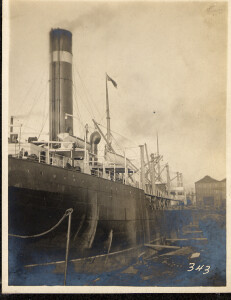 | 1904/12/06 | Newport News Shipbuilding and Dry Dock Company. | USA; VIRGINIA; NEWPORT NEWS | WRITTEN ON ALBUM PAGE: AUGUST BELMONT, DEC. 6, 1904, BUILT1902 AT NEWSCASTLE BY C.S SWAN & HUNTER LIMITED. OWNED BY PENSACOLA TRADING COMNPANY LIMITED, 4640T, 372,6 X 50 X 27.5 . RENAMED ANCULA | photograph | CURATOR NOTES: Side view of ship in dry dock. ," EARLY PHOTOGRAPHS OF THE NEWPORT NEWS SHIP BUILDING & DRY DOCK COMPANY, TAKEN BY CHARLES F. BAILEY, VOL. 3 ,1903-1904" | MS0270/-03.15#14 | ||
| 3 | 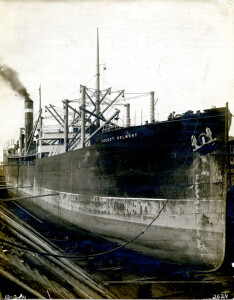 | 1924-1925 | USA; VIRGINIA; NEWPORT NEWS | WRITTEN ON VERSO: BUILT1902, AT NEWSCASTLE BY C.S SWAN & HUNTER LIMITED. OWNED BY PENSACOLA TRADING COMNPANY LIMITED, 4640T, 372,6 X 50 X 27.5 . RENAMED ANCULA | Ship in dry dock. | P0001.003/01-#PB17248 | ||||
| 4 | 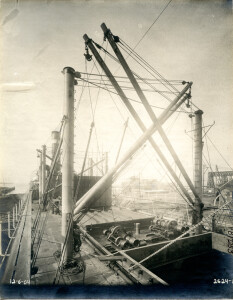 | USA; VIRGINIA; NEWPORT NEWS | WRITTEN ON VERSO: BUILT1902, AT NEW CASTLE BY C.S SWAN & HUNTER LIMITED. OWNED BY PENSACOLA TRADING COMPANY LIMITED, 4640T, 372,6 X 50 X 27.5 . RENAMED ANCULA | Cargo ship deck showing cargo hold. | P0001.003/01-#PB17253 | |||||
| 5 | 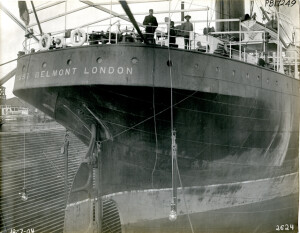 | USA; VIRGINIA; NEWPORT NEWS | WRITTEN ON VERSO: BUILT1902, AT NEWSCASTLE BY C.S SWAN & HUNTER LIMITED. OWNED BY PENSACOLA TRADING COMNPANY LIMITED, 4640T, 372,6 X 50 X 27.5 . RENAMED ANCULA | Close stern view of ship in dry dock, workers posed on deck. | P0001.003/01-#PB17249 | |||||
| 6 | 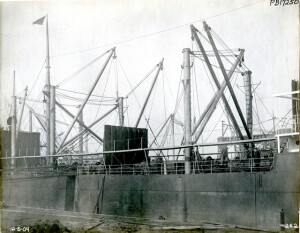 | 1924-1925 | USA; VIRGINIA; NEWPORT NEWS | WRITTEN ON VERSO: BUILT 1902, AT NEW CASTLE BY C.S SWAN & HUNTER LIMITED. OWNED BY PENSACOLA TRADING COMPANY LIMITED, 4640T, 372,6 X 50 X 27.5 . RENAMED ANCULA. | Side view of ship in dry dock. | P0001.003/01-#PB17250 | ||||
| 7 | 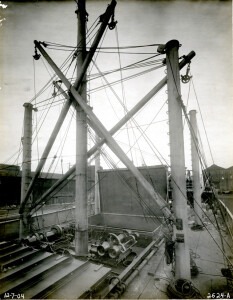 | USA; VIRGINIA; NEWPORT NEWS | WRITTEN ON VERSO: BUILT1902, AT NEW CASTLE BY C.S SWAN & HUNTER LIMITED. OWNED BY PENSACOLA TRADING COMPANY LIMITED, 4640T, 372,6 X 50 X 27.5 . RENAMED ANCULA | Looking forward showing cargo hatch. | P0001.003/01-#PB17251 | |||||
| 8 | 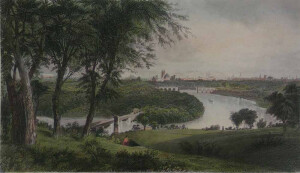 | SHORT DESCRIPTION: The print shows Philadelphia from the Belmont Plateau in the West Fairmount Park, looking across the Schuylkill River. There are two bridges in the scene: the bridge in the foreground is the Columbia Bridge and the bridge in the distance is the Connecting Railroad Bridge. There are two people sitting on the ground, as well as a monument of some type in the foreground. In the distance is the city of Philadelphia with the Cathedral Basilica of Saints Peter and Paul and several other church steeples along the cityscape. NOTES: From “Picturesque America, or The Land We Live In” volume 2, published in New York by D. Appleton and Co. publishers, 1874. The print faces page 41. NOTES: The Connecting Railway Bridge is also known as the Pennsylvania Railroad Bridge and was built between 1866 and 1867. It had arches on either end and a Whipple truss section in the middle. The Columbia Bridge is a railroad bridge first built in 1834. It was a covered bridge, but was replaced in 1886 and again in 1920. The Cathedral Basilica of Saints Peter and Paul was built between 1846 and 1864. Fairmount Park began in 1820, with paths and gardens built around the city waterworks. It sits on either side of the Schuylkill River, forming the East Park and the West Park. This print is viewed from the West Park, which hosted the 1876 Centennial Exhibition. The text of the book describes the upcoming exhibition (the book was published in 1874). | CL15917 | |||||||
| 9 | No image URL. | Museums–United States | America's museums : __the Belmont report. A report to the Federal Council on the Arts and the Humanities | LB6021 | ||||||
| 10 | 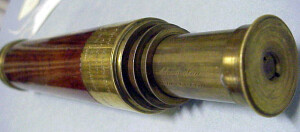 | SHORT DESCRIPTION: (Morzer Bruyns, 1995) Terrestrial refracting telescope, made by ADIE & Son of Edinburgh, Scotland (fl.1835-1857-1880). Obj. 41mm, occ. 18mm. Four sections, achromatic, gives a clear image. The tube is wood covered, the instrument is kept in its original leather carrying case with strap. The instrument was part of the Breadalbane Prize of 1844, for Henry MACKENZIE of Belmont. TIME-SPACE: 1840-1850. LABEL COPY: Telescope, 1844/ Adie & Son, Edinburgh, maker/ Museum Collection, 37.2209.1 [label copy for Collections gallery, 1996] ADDITIONAL INFORMATION: SEE CLIFTON, DIRECTORY. GLORIA CLIFTON, DIRECTORY OF BRITISH SCIENTIFIC INSTRUMENT MAKERS 1550-1851, LONDON, 1995. INVENTORY: case - there is one (1) component part. | CL9295 | |||||||
| 11 | No image URL. | Monograph (Academy of Applied Science (Belmont, Mass.)) ; 2. | Underwater archaeology.; International law; Maritime law | International law and marine archaeology | LB15457 | |||||
| 12 | 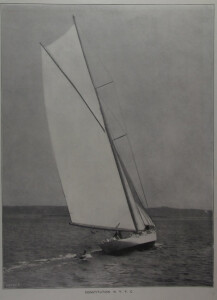 | VESSEL INFORMATION - VESSEL NAME: CONSTITUTION VESSEL BUILT: 1901 SHIPBUILDER: HERRESHOFF MFG CO. BUILDER LOCATION: BRISTOL, R.I. SHIP OWNERS: AUGUST BELMONT AND OTHERS VESSEL DIMENSIONS: 159 tons, 105.5 x 5 x 25, 2 x 19.7 | CL9955 | |||||||
| 13 | No image URL. | The James Forrestal fellowships in naval history. | LB52520 | |||||||
| 14 | No image URL. | illus., plate. | LB70038 | |||||||
| 15 | No image URL. | United States. Navy–Biography | Admirals–United States–Biography. | Includes index. | LB18993 | |||||
| 16 | No image URL. | United States–History, Naval. | The Naval Academy illustrated history of the United States Navy __ __[by] E.B. Potter | LB9460 | ||||||
| 17 | No image URL. | United States. Navy–Biography | Admirals–United States–Biography. | Reprint. Originally published: Annapolis, Md. : Naval Institute Press, c1976. | LB83016 | |||||
| 18 | No image URL. | United States–History, Naval. | Naval history. | The United States and world sea power __ __Authors: Henry H. Adams [and others] E.B. Potter, editor ; J.R. Fredland, assistant editor | LB9461 | |||||
| 19 | No image URL. | United States. Navy | Admirals–United States; World War, 1939-1945–Naval operations, American. | Includes index. | LB26517 | |||||
| 20 | No image URL. | World War, 1939-1945–Naval operations.; Naval history–20th century; Naval battles–History–20th century.; Warships–History–20th century. | "Adapted from the naval history of World War II as told in Sea power (Prentice-Hall, Inc., 1960)... source of quotations and special data in The Great sea war should consult the footnotes in Sea Power" P. ix. | LB85984 | ||||||
| 21 | No image URL. | Naval history. | Sea power : __a naval history __associate editor : Chester W. Nimitz ; assistant editors : J.R. Fredland [and] Henry H. Adams ; authors : Henry H. Adams [and others] | LB9308 | ||||||
| 22 | No image URL. | Naval history.; Sea-power. | Sea power : __a naval history __editor, E.B. Potter ; assistant editors, Roger Fredland, Henry H. Adams ; authors, Henry H. Adams ... [et al.] | LB93313 | ||||||
| 23 | 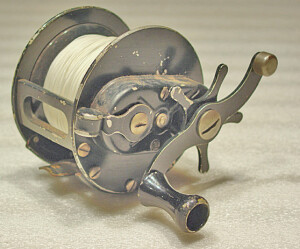 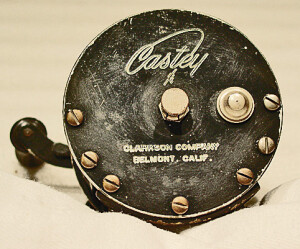 | SHORT DESCRIPTION: This is a metal reel painted black with white letters and white fishing line. The reel is scraped and scratched throughout, especially around the edges. the paint is chipped throughout and the mounting bracket is rusty. Screws and fittings are brass. | CL29219 | |||||||
| 24 | 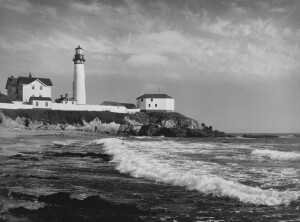 | Pigeon Point Lighthouse (Calif.) | California | on verso: stamped -Exhibition of Marine Photography, 1955. photographer stamp: Print by dan Stewart, 1230 Kedith, Belmont, Calif. | Lighthouses | Low angle view of the Pigeon Point Lighthouse with a wave in the foreground . | P0025/08-#01 | |||
| 25 | No image URL. | A VIEW OF THE TOWN OF ST. GEORGE IN THE ISLAND OF GRENADA | CL19016 | |||||||
| 26 | 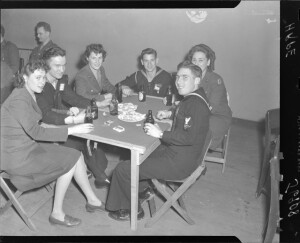 | 3/17/1944 | United States. Army. Camp Patrick Henry (Va.). Recreation Hall 7. | J6908 - Shown at St. Patricks Day Wac Pary at Rec Hall 7, CPH are: Pfc. M. "Johnnie" Belyea, 3rd Wac Company, Station Compliment, CPH, formerly of Portland, Maine; Albert Matyos, 427 Belmont Street, Manchester, N.H.; Pvt. Bernice H. French, 3rd WacCo., Station compliment, CPH, formerly of New Castle, Pa.; Leon C. Bone, s.1/c, 804 Ann Ave., St. Louis, Mo., Pfc. Sharon Van Wilgen, Formerly of Austin, Minn.; Agelo S. Vitale, So. N. H.,3/c, 10 Joy Streen Johnstown R. I. 3-17-44 Official Photograph, U. S. Army Signal Corps, HRPE, Newport News, Va. | Parties–Virginia–Newport News. | Three couples, the women all WACs and the men all in the Navy, are seated around a table, with plates of crackers and cheese slices, and bottles of beer and coke. | P0003/01-#J-6908 | |||
| 27 | 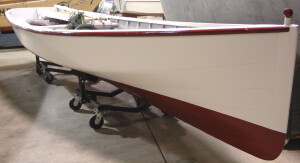 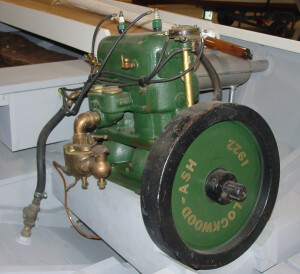 | NOTES: William Francis Wiley built the Potomac River dory boat BERNICE in 1918 at Washington, D.C., while working at the Navy shipyard there [There is still some confusion date about the construction date of the boat. The Wiley family remembers 1918 as the construction date which is currently on the registration, however, in 1959 Vernon K. Wiley received a Certificate of Award of Number to an undocumented vessel for her that lists the year built as 1919]. BERNICE is a small inboard powered Potomac River dory boat. William used BERNICE in the Potomac River for commercial and recreational fishing. In 1920, Francis moved to Lorton, Virginia and used the boat there until 1923 when he went to work as the superintendent of teh Belmont Bay Hunt Club on the Potomac River. Between 1923 and 1939, William attended to the day to day operation of the club. During this period Williams activities included carving decoys, farming, boatbuilding, and fishing. He employed BERNICE in his job as an all-purpose workboat. In 1939 William returned to Lorton, VA, his home town, and went to work as a house carpenter. In 1942, listing Lorton as his residence, Wiley registered the BERNICE with the Coast Guard with the intended use as "pleasure and fishing" in the Potomac River and its tributaries. Mr. Keith Vernon Wiley purchased the boat from his father, William Francis Wiley, in 1952 for $150.00. BERNICE was originally equipped with a Lyons engine. In the early 1920's W. F. Wiley installed an 8 HP Lockwood Ash 2 Cylinder marine engine (the second or third engine). This engine, Mr. Wiley donated with the boat. A 1954 photograph the boats interior clearly shows the Lockwood Ash engine. By 1959 V.K. Wiley repowered BERNICE with a 45 HP Gray Marine Engine (D-1678). Mr. Richard Walker, the nephew of the donor, in 1991 installed a different 45 HP Gray Marine engine which was only recently removed from the boat. Other boats William Francis Wiley built include a boat called the FRANCIS and another called THE NAIL. NOTES: The Potomac River dory boat BERNICE, represents a unique regional workboat type which is significant in the history of Chesapeake Bay watercraft design. In their book "Working the Water", Anne Witty and Paula Johnson state that Potomac River dory boats developed in the 1880's on the Potomac River for oystering and crabbing. They also indicate that the boat type is quite rare and that only a few are in existence. The Calvert Marine Museum's Potomac River dory boat, LETS SEE (CMM 76.380), is briefly described in the book and is accompanied with a profile view. The characteristics that distinguish this boat type are V-bottom construction, fore and aft planking, and strong sweeping chine which lands high on her plumb stem [Paula J. Johnson, ed., Working the Water: The Commercial Fisheries of Maryland's Patuxent River (Charlottesville, VA: The Calvert Marine Museum and The University Press of Virginia 1988), pg. 177]. Howard Chapelle cites the same features in his short description of Potomac River dory boats. He describes the Potomac River dory boat a distinctive type of V-bottomed boat built extensively on the peninsula between the Potomac and Rappahannock Rivers. Also, according to Chapelle, the Potomac dory boat was rigged with leg of mutton sails, planked fore and aft, and had strong sweeping chines that terminated high on the stempost. The fore and aft planking required a complete frame system, and the high chines forward allowed the planks to meet the stem without excessive twist in the lower strakes [Howard I. Chappelle, American Small Sailing Craft: Their Design, Development and Construction (New York: W.W. Norton & Company, 1951), p. 315]. BOAT INFORMATION - BOAT NAME: BERNICE BOAT TYPE: POTOMAC RIVER DORY BOAT ORIGIN: POTOMAC RIVER BOAT DIMENSIONS: 19-6-0 (length oa); 5-4-0 (beam) INVENTORY: Rudder; ENGINE, MODEL #68, 8 HP WITH MUFFLER; TILLER - there are four (4) component parts. | CL21984 | |||||||
| 28 | No image URL. | United States. Navy–History–Civil War, 1861-1865.; Lexington (Gunboat : 1861).; Conestoga (Side wheel steamer : 1862).; Tyler (Side wheel gunboat : 1861). | Mississippi River Valley–History–Riverine operations. Civil War, 1861-1865; United States–History–Riverine operations. Civil War, 1861-1865 | Warships–History–19th century. Mississippi River Valley; Warships–History–19th century. United States | The timberclads in the Civil War : __the Lexington, Conestoga, and Tyler on the western waters __Myron J. Smith, Jr. ; foreword by B. Franklin Cooling | LB93939 | ||||
| 29 | 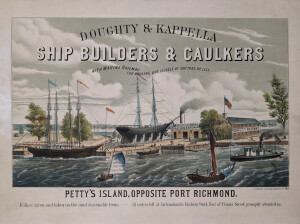 | NOTES: Notes from "Report on Historical and Archival Research, Petty's Island Preserve, Pennsauken Township, Camden County, New Jersey" January 2016: Doughty & Kapella were successors to Stewart & Walters on the southern end of Petty's island. The shipyard slips, wharves and a marine railway of Doughty & Kapella faced onto the Pennsylvania channel and were relatively modest in size. NOTES: [History of company compiled from newspapers.com] The Philadelphia Inquirer, September 14, 1869, page 3: A beautiful model tug-boat named after the proprietor of the Kensington Iron Works, A. L. Archambault, Esq., was successfully launched from the shipyard of Messrs. Doughty & Kappella, at Petty's Island, on Saturday morning last, at hight water. She is 55 feet long, 13 feet beam, 5 feet 3 inches hold. The Philadelphia Inquirer, May 2, 1872, page 2: Article indicates Doughty & Kappella built a new tug named James B. Alexander. An article in the Philadelphia Inquirer dated June 22, 1874 indicates Doughty & Kapella were in business in 1874: The new steam yacht Belmont, intended for use on the Schuylkill between Fairmount and the Falls, made a very successful trial trip on Saturday. She was built by Messrs Doughty & Kapella, on Petty's Island. Doughty & Kappella showed the steam yacht "Meteor" in Machinery Hall in the Pennsylvania section of the International Exhibition in 1876. New York Daily Herald, December 19, 1879, page 10: Doughty & Kappella launched an unnamed passenger and freight steamer for Capt. William P. Drake. The Morning Post, February 7, 1880, page 2: Doughty & Kappella, Petty's Island, have laid the keel for a freighting steamer for parties in New York. The Norfolk Landmark, November 16, 1880, page 3: The Nautical Gazette says: The Steamer General Robert E. Lee, which was built by Messrs. Doughty and Kapellla, at Petty's Island, to run between Norfolk and West Point, is now receiving her finishing touches, and will leave for her destination in a few days. The Philadelphia Inquirer, April 16, 1881, page 2: The company contracted to build two steam tugs for Captain James McCauley. They will be used for river and bay towing. The Philadelphia Inquirer, July 20, 1881, page 3: The tug John C. Bradley, recently built at the yard of Doughty & Kapella, on Petty's Island, was launched at high water yesterday. Another tug, to be called the Thomas J. Yorke, Jr., will be launched in a few days. [these are the two tugs built for Capt. James McCauley] The Philadelphia Inquirer, August 20, 1881, page 2: Doughty & Kapella, Petty's Island, are doing the wood work on the City Ice Boat No. 1. Daily Republican, January 8, 1883, page 1: G. Morris Doughty, senior member of the firm of Doughty & Kapella, shipbuilders, on Petty's Island, died of dropsey on Saturday. He was 64 years of age. Engineering Mechanics, Volume 2, August 19, 1882, page 118: Messrs. Doughty & Kapella, Shipbuilders at Petty's Island (Philadelphia), have contracted with the Panama Canal Co. to build three large dredging machines 100 feet long, 30 feet beam, and 10 feet depth of hold, for use in digging the new short cut of the Pacific Coast. The machinery to be placed in the vessels is being built in San Francisco, and will be shipped to Philadelphia, to be fitted into the vessels. The apparatus is peculiar in character, and will be so constructed as to be able to cut thorugh the heavy vegetable undergrowth which thus far has been a serious obstruction to the work. The Philadelphia Inquirer, March 16, 1883, page 8: Mr. Adolph F. Kapella, surviving and liquidating partner of the late firm of Doughty & Kapella, yesterday made an assignment to Edmund L. Leavy, of the firm Neafie & Levy for the benefit of his creditors. Railway World, September 15, 1883, page 971: The second of the three dredges built in Philadelphia for work on the Panama Canal, the Prosper Huerne, named after a distinguished French engineer, was launched on September 6th from the shipyard on Petty's Island, formerly operated by Doughty & Kapella, and now leased and run by Slaven Brothers. The first dredge, the Count de Lesseps, was launched on the 17th of March, and has been used on the Panama work since August 1st, dredging 10,000 cubic yards a day. The Prosper Huerne will be ready to start for the isthmus in three or four weeks, and the third dredge will be launched on the 23rd of this month. Slaven Brothers are officers of the American Contracting and Dredging Company, of New York, which has the contract for dredging seven and a half miles of the new canal on the Atlantic side of the Gettun, which is an important station. The excavation to be made by them under this contract will involve the removal of 8,000,000 cubic yards, at a price of $2,000,000. The machines in operation dump the dredge matter into a discharge pipe, which carries it off beyond the banks of the canal. The De Lesseps digs to a depth of 12 feet and to a width of 100 feet. The Huerne, following in the wake of the De Lesseps, digs to a width of 200 feet, and the third dredge in the rear will dig the canal to the full depth of 27-1/2 feet, giving the sides an easy slope and a widge of 110 feet at the bottom. De Lesseps promises to finish the canal by 1888, the contract of Slaven Brothers requiring them to finish their sections in fifteen months. The Philadelphia Inquirer, August 30, 1922, page 27: In the obituary of Adolph F. Kappella (died the Sunday before), it was stated that "at the beginning of the Civil War he and an associate founded the firm of Kappella & Doughty on Petty's Island." | CL20362 | |||||||
| 30 | 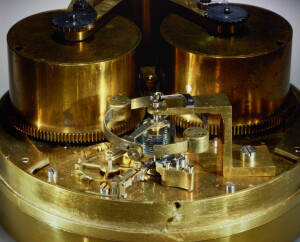 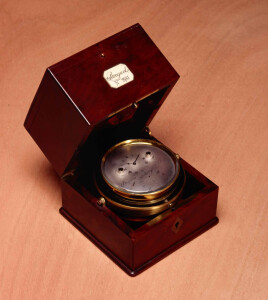 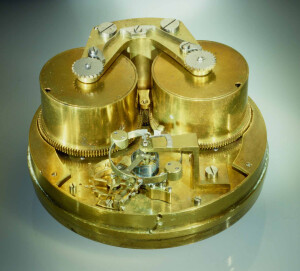 | SHORT DESCRIPTION: [Morzer Bruyns, 1995] Ship's chronometer made by BREGUET et fils of Paris, no 2981 L. In a wooden box which probably came from a different chronometer. The key or ratchet is missing, and the seconds arm is separate from the piece in the box. [Jonathan Betts, 2002] BOX/MOUNTING: Plain, three-tier mahogany box, 15.5cms high, 16cms wide and 16cms deep with solid lid having a butt piano hinge, opening to reveal a fully glazed aperture for viewing dial. Lozenge-shaped ivory plaque engraved: "Breguet No.2981" fitted (slightly imperfectly) on front of the upper half, and cut from solid ivory with a threaded part, fixed from inside the upper half with an ivory nut. Diamond shaped brass escutcheon to keyhole on front. A quadrant stop piece on the right hand side stops the upper half (on a piano hinge) from opening further than 90 degrees. There is a block in the upper half to secure the key (now missing) in the standard position at the back right of the box.The style and type of construction of the box, with overlapping mitres on the front edge, appears to date it to c.1860. The arrangement of circular gimbals and the general layout of the box are conventional for the 1860s and not at all typical for a Breguet chronometer of this period. The box is rather small for the movement and the gimballing is somewhat rough in finish and appears never to have been lacquered, whereas the bowl, which is contemporary with the movement, bears the remains of lacquer. There also appears never to have been any form of gimbal lock, though a number of genuine Breguet chronometers from later in the century are known which also have no lock. Inside the bowl are roughly shaped lead counter weights, fixed in with brass screws. The bezel, which has side screws to fix it to the bowl, has a flat bevelled glass, not pierced with winding holes, and a polished brass, concave site ring. DIAL & HANDS: Matt silvered brass dial of 100mmsi, signed: "No 2981 / L" above the upper main dial, and: "Breguet & Fils" across the centre. The main dial has roman numerals and arabic ten minute figures. The seconds in the lower part of the dial has arabic ten second intervals and 'observatory' batons every five seconds. The winding holes in the dial have tube-collars fitted to dial plate, flanking the upper main dial. Blued steel "spade and poker" hands with a fine blued-steel seconds hand with a pierced round tail (possibly not original). The back of the dial is scratched: "121x10x30 / 13" and: "Guyon / 1861". MOVEMENT: Typical 2 day double-barrel movement of Breguet's earlier caliber with winding through the dial. This caliber has wheels with short arbors run under bridges and cocks on both sides of a central main plate. There are "pitching observation" holes for the centre/third (main plate) and third/fourth (train bridge). The underside of the main plate is stamped: "2981". The mainsprings (white metal and a little unevenly finished) are scratch-marked: left: "Lesquereux & Gerbel / Juillet 1817"; and right: "No.2 / II ou" (?). Both barrels have plugged holes for other positions of stopwork (left barrel two, and right barrel three other positions) and the right barrel has another plugged position for the mainspring brace near the existing hole. Both winding squares (facing upwards) have dust traps incorporated into them and the upper seconds pivot has a little dust bowl fitted under the seconds hand to protect the oil in the sink. Generally the movement does not have a high finish, some parts having a coarse-stoned, random finish and some parts with a somewhat finer stoning, though still not particularly even. As a general comment, although this design is easier to work on, it leaves the train of wheels with very short arbors, exacerbating the effect of wear on any one pivot. Breguet's later double barrel caliber as in No.4870 (See NA0071), with longer arbors, is a much better design. ESCAPEMENT, BALANCE & SPRING AND JEWELLING: Earnshaw-type spring detent escapement mounted on the "navette" (pointed oval) platform, characteristic of this caliber, stamped on the underside: "3" and scratched: "Guyon 1861 / 121, 111, 30, 11, 13" . A brass detent pegged into the platform can be swung into the path of the escape wheel teeth to lock the train, so that the balance and detent can be removed without having to let down the mainsprings. The spring detent, which has an angled, brass (very low carat gold?) passing spring, is mounted via a clamp, straight onto its single blade spring, to an adjustable brass banking piece. It is not very finely finished and might be a later replacement. There is an inspection hole in the platform to check the detent's locking depth. Underneath the platform is a small threaded hole and sink, next to the lower balance jewelling, with no known function. The ordinary compensation balance has a brass arm and brass and steel bimetal rims affixed by screws. Screwed onto the rims from the top are circular compensation weights, hollowed out from underneath. The balance probably dates from the 1860s and the underside of the cock and the inside of the bowl have later filed clearance to allow room for it. Mean time nuts are mounted on threads just offset from the ends of the arms. The arms have small threaded holes at the ends, probably for upstanding pins intended to form part of a stop-mechanism, apparently never fitted. Pale blued-steel helical balance spring with terminal curves on both ends, the lower end attached via a steel slip, to Breguet's three-foot adjustable stud. The discharge roller is mounted above the impulse roller on the balance staff. The only pivot jewels are white holes and endstones on the escape wheel and balance, the upper balance endstone being mounted in Breguet's steel paracute. ALTERATIONS/CONDITION: The evidence in this chronometer presents something of a quandary. The movement and bowl with bezel appears to be a very early example of Breguet's new double barrel calibre and dates from 1817. However, the later box, the balance and perhaps the detent, all dating from C.1860 suggests it was rebuilt at this time (by Guyon?) after it had got into disrepair. Even then, the work may not have been entirely finished: it is difficult to explain the rough gimbals and lead counterweights in the bowl, without proper finishing or the provision of locking, and the unfinished balance stop/start mechanism. Other chronometers signed by Breguets (and definitely with movements made by them) with very similar anomalous features are known, and it may be that this was one of a batch of old Breguet chronometers which got rather roughly rebuilt in the 1860s. The condition of the instrument is generally acceptable. The box has a number of bumps and old scratches but is otherwise very sound. The lacquer on the case and gimbal brasswork, where it exists, is patchy and streaky. The dial silvering has losses and has been resilvered at some stage to include the brass winding collars. The seconds hand has lost its brass pipe. The movement's surface is somewhat etched and fingerprinted and the lower balance staff pivot is broken. Two screws for fixing the bezel to the movement are missing and the glass over the dial without winding holes may well be a later replacement of a glass pierced for the winding key and with brass caps to keep out the dust. PROVENANCE, ACQUISITION & NOTES: The entry for this chronometer in the Breguet archives in Paris reads: "2981 Breguet et Fils : Horloge Marine AL, echappement no.3. Vendue a M.Chevalier jeune pour Cottereau le 4 Novembre 1817: 1728 Francs. Rentree de Chevalier Neveu et Allais le 15 octobre 1823 : 1500 Francs. Envoyee a Ducom le 11 aout 1824 : 2200 Francs". This accords with the movement of the chronometer which has escapement No.3. It seems the instrument was sold to a M. Chevalier the younger, presumably an agent for Breguet, for him to sell on to a M. Cottereau. It was however returned six years later by the company Chevalier, Nephew and Allais and then sold on again to Ducom the following year. The significance of the code letter "L" is unknown at present, but it may refer to a specific subtlety of this caliber of movement. About a dozen other chronometers by Breguet are known with a code letter, all dating from the period 1817-1825. The chronometer was acquired by Frederick Hill from the Paul Chamberlain collection in 1941. There are fine public collections of chronometers, clocks and watches by Breguet at: the Musee des Arts et Metiers in Paris; Musee International d'Hologerie, La Chaux de Fonds, Switzerland; the British Museum, London; The Clockmakers' Company Museum, Guildhall, London; The National Maritime Museum, Greenwich, London; and in the Harris collection at Belmont, in Kent, UK. TIME-SPACE: 1810-1830. ADDITIONAL INFORMATION: SEE MERCER, P. 112 AND OBJECT FILE. TONY MERCER, CHRONOMETER MAKERS OF THE WORLD, COLCHESTER, 1991. INVENTORY: key - there is one (1) component part. | CL3277 | |||||||
| 31 | 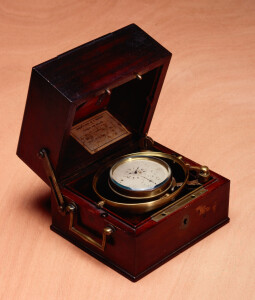 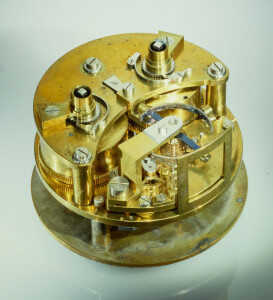 | SHORT DESCRIPTION: [Morzer Bruyns, 1995] Ship's chronometer made by BREGUET no 4870. In its original wooden box containing a label of the Observatory of St Nazaire, France. TIME-SPACE: 1820-1840. [Jonathan Betts, 2002] BOX/MOUNTING: Plain, two part mahogany box, wholly typical of the Breguet company's work at this time. 16.5cms high, 22cms wide and 18cms deep with a narrow projecting beading around the base and a sliding panel in the top revealing a porthole for viewing the dial, designed to be glazed from underneath with a pane of glass fastened in place below with four brass swivelling tabs. There is also a larger sprung clip inside the upper half for retaining the 'screw-down' key (now missing). The top of the box is attached with 10 steel fixings around the rear and side edges (possibly a later addition). The inside-back of the upper half has a glued-on label to record the 'age of the oil' which reads: OBSERVATOIRE DE ST. NAZAIRE / EPOQUE DES HUILES/ du No: 4870". Of the three places printed: " 18 " only the middle one has an entry, penned: "Maison". Lozenge-shaped brass plaque inset into top of sliding panel, engraved: "Breguet N4870". Heavy, brass drop handles to sides. Butting piano hinge fitted to the box, combined with a brass sliding brace fitted to the outside of the left hand side of the box to keep the upper half open at 90 degrees. The box has a two-prong, double-throw brass lock with a raised beading neatly matching the raised mahogany beading forming a dust seal around the joint of the box.The front of the box has an oval brass escutcheon round the key hole and has the remains of a glued paper label with an incomplete and indecipherable inscription (?Jel..Fr..eru...?). Built into bores within the left and right hand sides of the lower half of the box are spring loaded, self-tapping steel fixing screws. With a key on the square on top of these screws applying downward pressure, the sharp points of the screws project out of the bottom of the box. Turning the key at the same time will bite the screws into the wooden deck or table underneath, firmly securing the chronometer within the ship. Unscrewing with the key will release the box, the screws springing back inside the side of the box, keeping the sharp screw points out of harm's way. The gimbals have an oval ring and are of the standard layout. The gimbal lock consists of a double sprung blade mounted on the locking lever which engages a brass tongue under the gimbal ring and a notch in the bowl in the usual way. The double-ended winding key also serves for hand setting. A thick helical spring retains the upper half of the key's horizontal ratchet, ensuring a smooth but firm reversing action. The screwed bezel (3¼ turns) has a flat bevelled glass, and a polished brass, concave site ring. The plain bowl has swivelling shutters for the two winding holes on its underside, each engraved with a direction of wind arrow. Just visible, is a small rectangular hole, now neatly plugged, with the remains of engraving reading: "BAL....." and with "L..." on one side of hole and "F...." on the other. The chronometer evidently had a balance locking lever controlled from this position orginally, the engraving then reading: BALANCIER; FIXE and LIBRE. The movement lifts straight out of the bowl and has no fixing screws. DIAL & HANDS: Matt silvered brass dial of 87mmsÆ, retained with three long feet, and signed:"Breguet/Neveu" left of centre, and: "N4870/&Cie" to the right of centre and having two separate sub dials, the upper for hours and minutes, the lower for seconds. The hour dial has roman numerals and arabic ten minute figures. The seconds dial, has arabic numerals every 10 seconds and 'observatory batons' every five seconds. Blued steel 'spade' hands with a fine blued-steel seconds hand having a round tail. The back of the dial is scratched: "8153"(?) and has an area of 'knocking out' (to raise the metal on the front of the dial so that unwanted engraving can be stoned away) just after the position of "Breguet". MOVEMENT: Typical 2 day double-barrel movement of Breguet's later caliber winding from the rear. This caliber has the standard four wheel train with great wheels on the two going barrels, but the train wheels have somewhat longer arbors than the earlier twin barrel model (e.g. NA0093) which run under bridges and cocks on both sides of a central main plate. The lower centre and the third and fourth pivots have steel end plates. The underside of the main plate is stamped: "4870". The mainsprings (white metal and a little unevenly finished and buckled) are both scratch-marked: "Vincent 8bre 1829" &: "No.4870". Generally the movement is reasonably well finished but with a somewhat random curled finish. The numbers selected for the great wheels and center pinion (128 & 11) provide a fully 'hunting' mesh, i.e. at each revolution of the great wheel a given tooth will mesh with successive pinion leaves, only meeting with the same one after having cycled through all the others (in this case after 11 turns of the barrel). This subtle and intelligent feature ensures that any wear caused by inequalities in the manufacture of the wheels and pinion is completely evened out. ESCAPEMENT, BALANCE & SPRING AND JEWELLING: Earnshaw-type spring detent escapement mounted on the 'navette' (pointed oval) platform, characteristic of this caliber, which is stamped on the upper surface: "193". The platform has a protective rectangular upstanding guard surrounding that side of the main plate. One of the platform fixing screws terminates in a sharp point which, when withdrawn, allows a spring detent to drop into the wheel teeth of the fourth wheel, automatically preventing the train from running down when the platform is removed, a standard feature for this calibre after 1819. The escapement's spring detent is mounted on an adjustable brass banking piece. The undersprung compensation balance has a solid blued steel arm incorporating bimetal rims with Breguet's alloy (probably of silver/copper/zinc) for the outer element. This type of balance rim, which was used extensively by Breguet, has the advantage over the ordinary brass and steel bimetal in that it responds to temperature change more rapidly and yet is stiffer and therefore less prone to centrifugal flexing as the balance swings. Brass mean time nuts on fixed threads at the ends of the arms, with similar nuts on threads 90° round the rims, for compensation, with smaller 'fine-tuning' brass screws fixed at the ends of the rims with an option of nine holes for position. At the end of one of the arms is an up-standing pin for the (now missing) stop/start mechanism. The steel helical balance spring, with no terminal curves, is fixed to the balance with a concentric clamp (with platinum counter weights fixed on the other side of the balance staff) enabling adjustments to its length to alter the isochronal characteristics ( following Le Roy's method). The other end of the balance spring is attached via a steel slip, with a projecting pin locating in a slot, to Breguet's three-foot adjustable stud. The discharge roller is mounted above the impulse roller on the balance staff. All the pivot holes on the platform are in brass chatons. There are pink end stones on the escape wheel pivots and diamond and hardened steel end stones on the upper (cock) and lower (plate) balance pivots, respectively. ALTERATIONS/CONDITION: The chronometer appears to be in very original condition, though has signs of repairs and slight alterations such as the removal of the balance locking mechanism. The box is quite darkened in finish, has a few minor dents and knocks, and the top surface of the box is a little ink-stained. Areas of the brasswork in the case are heavily stained, especially the lower bowl and the gimbal lock. The key has the ratchet wheel broken loose inside.The dial silvering has losses and is tarnished in places.The left hand barrel has 3 teeth broken off the stop wheel, 7 teeth broken from the finger wheel, and the mainspring is broken 5½ turns from the center. The movement is otherwise generally sound and reasonably clean. PROVENANCE, ACQUISITION & NOTES: The record for this chronometer in the Breguet archives in Paris reads: "4870 Breguet, Neveu et Compagnie: Horologe Marine a deux barillets, petit modele, echappement libre a ressort no.193. Vendue par Huette le 30 aout 1834: 2000 Francs". This accords perfectly with the chronometer as it now is, a small model with two barrels and a spring detent escapement, numbered 193 on the platform. The records also show that the chronometer was begun in 1829, under Breguet et Fils, and the dial would originally have been signed by them. It was however, only completed by Breguet Neveu et Cie in 1834, explaining why the dial engraving has been changed: the knocking out is exactly where 'et Fils' would have been. The identity of 'Huette' who sold the chronometer, remains unknown. He may well have served as an unofficial agent for the company. The price of 2,000 Francs was standard for this model at the time. The spring maker Vincent, who made a very large number of springs for Breguet as well as Henri Motel, is recorded (Tardy) as working at rue de la Vieille Draperie, Paris, between 1806 and 1820. The label, which probably dates from the late 19th century, suggests this chronometer was repaired and then rated at St Nazaire Observatory. St. Nazaire was a major naval base on the west coast of France, and the Observatory, which was not a major astronomical Observatory of any kind, was probably a small testing and rating establishment associated with the base. It is thus possible the instrument was in French Navy service at this time. Frederick Hill acquired the chronometer in February 1937 at Marseilles, France, for the equivalent of about $25. There are fine public collections of chronometers, clocks and watches by Breguet at: the Musee des Arts et Metiers in Paris; Musee International d'Hologerie, La Chaux de Fonds, Switzerland; the British Museum, London; The Clockmakers' Company Museum, Guildhall, London; The National Maritime Museum, Greenwich, London; and in the Harris collection at Belmont, in Kent, UK. ADDITIONAL INFORMATION: See Mercer, p.112 & Object File. TONY MERCER, CHRONOMETER MAKERS OF THE WORLD, COLCHESTER, 1991. INVENTORY: key - there is one (1) component part. | CL3247 | |||||||
| 32 | No image URL. | Baltimore and Ohio Railroad Company.; Humble Oil and Refining Company (Incorporated in Tex.).; Musée de Cluny.; Flying Cloud (Schooner : 1917).; Port Authority of New York and New Jersey.; Caterpillar Tractor Company.; Pennsylvania Railroad.; Saratoga (Aircraft carrier : CV-3).; Windsor Castle.; Salisbury Cathedral.; Nantucket (Ironclad : 1863).; Blakeley (Destroyer : DD-150).; Rochester (Heavy cruiser : CA- 2).; Yosemite National Park (Agency : U.S.).; Saratoga (Aircraft carrier : CV-3). | Saranac (N.Y. : Town)–Photographs.; Paul Smiths (N.Y.)–Photographs.; Whiteface Mountain (N.Y.)–Photographs.; Ridgefield (Conn.)–Photographs.; Browning (Mont.)–Photographs.; Baytown (Tex.)–Photographs.; Titusville (Pa.)–Photographs.; Jersey City (N.J.)–Photographs.; Centerville (N.J.)–Photographs.; Boston (Mass.)–Photographs.; Munich (Germany)–Photographs.; Manila (Philippines)–Photographs.; Luzon (Philippines)–Photographs.; Atlantic City (N.J.)–Photographs.; Peoria (Ill.)–Photographs.; Houston (Tex.)–Photographs.; Zermatt (Switzerland)–Photographs.; Martha's Vineyard (Mass.)–Photographs.; Hudson River (N.Y. and N.J.). Photographs.; East River (N.Y.)–Photographs.; Windsor (Windsor and Maidenhead, England)–Photographs.; Salisbury (England)–Photographs.; Odesa (Ukraine)–Photographs.; Edgartown (Mass.)–Photographs.; Lake Ontario (N.Y. and Ont.)–Photographs.; Toronto (Ont.)–Photographs.; Niagara Falls (N.Y. and Ont.)–Photographs.; Long Island (N.Y.)–Photographs.; Lake Oswego (Or.)–Photographs.; Nassau (Bahamas)–Photographs.; Point Judith (R.I.)–Photographs.; Cape Cod (Mass.)–Photographs.; Walden Pond (Middlesex County, Mass.)–Photographs.; Mariposa Grove (Calif.)–Photographs.; Danube River–Photographs. | Motorboats–New York (State)–Saranac–Photographs.; Yachts–Photographs.; Yachting–Photographs.; Yacht racing–Photographs.; Railroad trains–Photographs.; Cranes, derricks, etc. Texas–Photographs.; National parks and reserves–California–Photographs.; B-36 bomber–Photographs.; Airplanes, Military–Photographs.; Petroleum industry and trade–Texas–Photographs.; Petroleum industry and trade–Pennsylvania–Photographs.; Ocean liners–Photographs.; Zoos–Photographs.; Museums–France–Paris–Photographs.; Historic buildings–United States–New Jersey–Photographs.; Steamboats–Photographs.; Women golfers–Photographs.; Socialites–Photographs.; Thunderjet (Jet fighter plane)–Photographs.; Cemeteries–Philippines–Photographs.; Windmills–Netherlands–Photographs.; Hotels–New Jersey–Atlantic City–Photographs.; Hotels–New York (State)–Photographs.; Fishing boats–Photographs.; Monuments–Texas–Houston–Photographs.; Glaciers–Switzerland–Photographs.; Great Pyramid (Egypt)–Photographs.; Dry docks–Massachusetts–Boston–Photographs.; Railroads–Pennsylvania–Photographs.; Indigenous peoples–Belgian Congo–Photographs.; Constellations–Photographs.; River boats–Photographs.; Harbors–Barbados–Photographs.; Catboats–Photographs.; Boats and boating–Photographs.; Sailboats–Photographs.; Cargo ships–Photographs.; Cargo ships–Nassau–Photographs.; Destroyers (Warships)–Photographs.; Cruisers (Warships)–Photographs.; Steam yachts–Photographs. | Contains photographic negatives of Saranac Lake, New York, Paul Smiths Hotel in Paul Smiths, New York, the Whiteface Golf Club, the yacht Cressida, portraits of children, views of Ridgefield, Connecticut, Douglas Fairbanks Jr, views of Madrid, Spain, railroad workers, freight train cars, portrait of the Duke of Clarence and Avondale, Captain Thomas Fleming Day and crew, giant sequoias in Yosemite National Park, drilling derricks, a Consolidated Convair B 36 I bomber in flight, fractionating occuring at United Humble Oil Refinery in Baytown, Texas, the launching of the vessel SS Constitution, old engravings, lion cubs, magpies, a portrait of Herbert Spencer, a portrait of Reverend CH Parkhurst, a portrait of Charles Darwin, a portrait of Charles Dickens, views of Jersey City, New Jersey, the Musee de Cluny, various paintings, Dale Cottage in Centerville, New Jersey, a portrait of Lily Langtree, the Anatomy Lesson painting by Rembrandt, the Statue of Winged Victory, the Statue of Hercules, a side view drawing of the vessel SS Nederland, views of Lynbrook, New York, Nelson Eddy, horses, rattlesnakes, spotted leopards, Miss Virginia Van Wie, Miss Edith Cummings, Mrs Alexia Stirling Fraser, Miss Glenna Collett, Mrs CH Vanderbeck, Miss Marian Hollins, Mrs HB Stetson, Mrs Marian Burns Horn, Mrs DC Hurd, Mrs Arnold Jackson, a statue of Putto with dolphins, the painting Children of Charles I by Van Dyck, the atomic energy plant in Oak Ridge, Tennessee, asbestos mines in Amiantos, Cyprus, a Republic F 84 Thunderjet in air, experimental vehicles, the American export liner SS Independence, unidentified yachts, sailors at work, the yacht Tomerlane, at Lawley's Yard in Boston, Massachusetts, views of Munich, Germany, views of the Philippine Islands, views of Atlantic City, New Jersey, the New Jersey State Highway Department building, the Holland-Rantos Company Plant, port side view of the yacht Flying Cloud, Port of new York Authority Bus Terminal, the fishing boat Ranger, the Caterpillar Tractor Company in Peoria, Illinois, the San Jacinto monument near Houston, Texas, passenger liners at assembly plant, views of icebergs and ice floes, factories, views of Aletsch Glacier, views of Obergabelhorn in Zermatt, Switzerland, elephants, an International Harvester demonstration, the tanker Victoria, the early Herreshoff steam yacht Stilletto, views of the Pyramids of Gizeh, unidentified warships in dry dock, Pennsylvania railroad freight cars, natives of Belgian Congo, American Civil War veterans in military dress, the vessel SS State of Texas, the vessel USS Saratoga under sail, the river boat Mary Powell under way, Julia Sanderson, Lillian Russell, the yacht Calunet, the yacht Arcady, the yacht Victoria, the yacht Exgenia, the yacht Caroline, the yacht Viking, the yacht Carola IV, the yacht American, the yacht Nakhoda, the vessel Wenonah at anchor, the steam yacht Erin under way on the Hudson River, the yacht Isis, the yacht Levanter, the yacht Ophrodite, the yacht Sagamore, the yacht Lyndorne, the yacht Yarada, the yacht Sialia, the yacht Noma, the yacht Iolanthe, unidentified ocean liners, natives in India, natives in Africa, Windsor Castle, Salisbury Cathedral, the yacht MB Lotosland, views of the waterfront at Odesa, Ukraine, the fishing boat California Bird under way, views of Niagara falls, beach views at Lake Ontario, harbors in Barbados, views of Vienna, Austria, Belmont Castle in Long Island, Lake Oswego in New York, views of the Hudson River, Nassau Harbor, loading on the vessel Queen Mary with safety nets, a lighthouse near Judith Point, Rhode Island, views of Corporation Beach at Cape Cod, Massachusetts, views of Waldon Pond in Massachusetts, the destroyer USS Blakeley, the cruiser USS Rochester, and the Wright Brothers. | P0002.001/50-157 |
Created 2026 by Don Barker, CBMM volunteer, for the Chesapeake Shipbuilding Project. shipbuilding@sailingworkboats.es